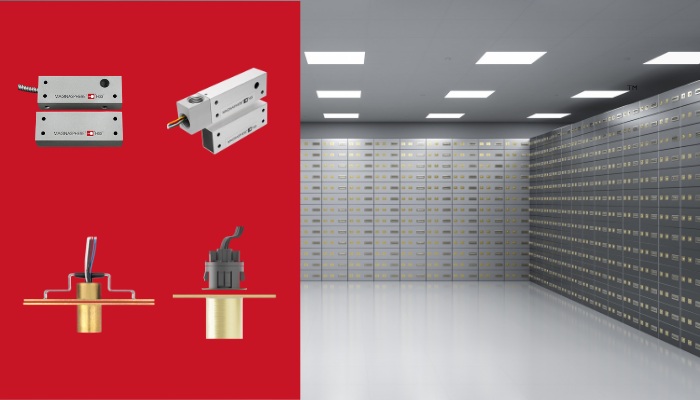
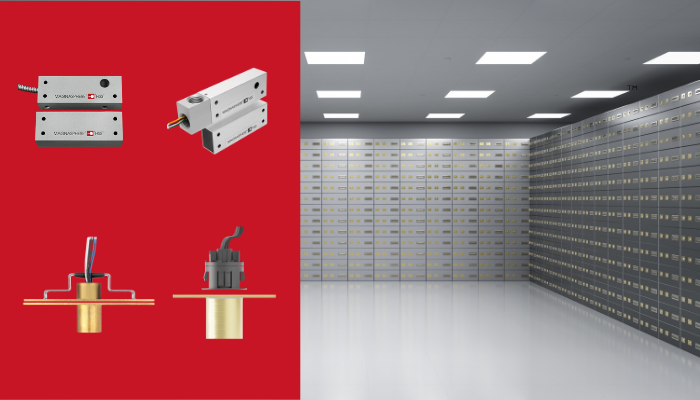
In high-security environments, standard reed switch contacts can be vulnerable to tampering or bypass. When specifying door contacts for applications like safes, vaults, or SCIFs, it’s important to understand how different technologies manage these risks.
1. Resistance to magnetic defeat
Look for technologies that can resist both external and internal magnetic interference – a known way to bypass conventional reed switch contacts
2. Compliance with recognized standards
UL 634 Level 2 certification is often required for high-security installations, including government and critical infrastructure projects.
3. Tamper detection capability
Removal or pry tamper circuits add another layer of protection by triggering an alert if the device is interfered with.
4. Reliability under electrical stress
Switch technologies that resist contact welding from power surges or environmental factors help maintain long-term reliability.
5. Installation flexibility
Features such as no-adjustment setup and retrofit compatibility can simplify upgrades and reduce installation time.
6. Integrated resistive components
Embedded end-of-line (EOL) resistors help streamline installation while maintaining system integrity.
7. Alarm configuration options
Single and dual alarm configurations allow systems to be tailored to different monitoring needs.
8. Suitability for high-security environments
In applications such as SCIFs, safes, and vaults, devices need to meet strict intrusion detection requirements.
If you’re specifying high-security switching solutions, our team can help review your requirements and recommend the right contact technology.